

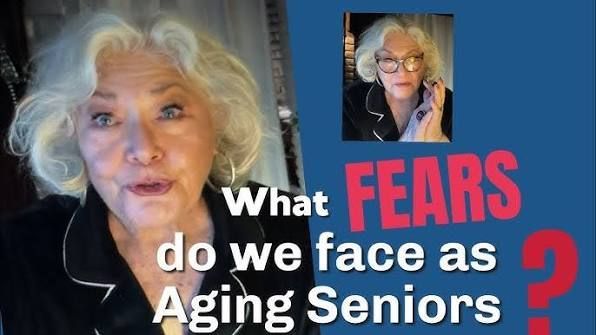
What Are Seniors Top Fears?

Donna Nichols • November 4, 2020

Top 5 Fears of Seniors?

As we age our fears age with us. As teenagers our fears are, will I have a date for prom? Will I pass my driving test?

Small fears now, but big fears back then.

As we progress to the workforce and married life the fears increase. Will I make enough money to provide for my family? Will I be a good mother or father? Will I raise good children? Will my spouse and children respect me? All viable fears that we carry with us through the years.

Then we reach our golden years and the fears seem to intensify.

The top fears for most seniors are loss of independence , running out of money, their health and/or eyesight worsening, losing their spouse, and isolation . The latter seems more prevalent today with the COVID-19 pandemic but has always been a concern for seniors.

So, how do you ease their minds, especially if you live in another state? First, let’s break them down to try and understand them better.

Understanding the Top Fear’s of Senior’s

1. Loss of independence

This is a big fear for many seniors.

Remember the freedom you had when you got your driver’s license?

Well, now think of it being taken away from you!!

Oh my, you can’t go wherever you want any more, you have to depend on others, just like when you were fifteen years old.

Nobody wants that, especially not your mother or father. Be patient with them, this is a catastrophic event for the elderly.

2. Running out of money

What if they didn’t save enough to live to be 100 years old?

A lot of people are living longer these days, and money doesn’t go as far as it used to.

While the cost of living increases, their pensions don’t. Some seniors don’t even receive a pension, so their fear is doubled.

You can’t live on Social Security alone anymore.

3. Health and/or eyesight worsening

They’ve already lost their independence, what if their health or eyesight declines even more?

Who will take care of them? Will they be able to fend for themselves if need be? Will one spouse be able to care for the other? Imagine losing your vision.

How scary would that be for you?

4. Losing their spouse

What will I do without my spouse?

He/she’s been with me forever!! I’ll be all alone, with no one to take care of or talk to anymore.

Just imagine this if you’re a senior and you’ve been married for 30+ years to the same person and all of a sudden they’re gone!

What would you do? You’d be awfully lonely and possibly afraid. What will the future hold for you?

5. Isolation

Everyone fears being isolated, but it’s worse for seniors.

They’re already isolated to a point, especially since COVID came to town.

They have been cooped up with no visitation from family members or friends. A lot of families put the seniors into a community and rarely visit, then throw COVID into the mix, and visitation is not allowed, This makes a good recipe for disaster.

Along with the isolation, they become depressed, those two are not a good combination.

What are Seniors Top Fears

How can you help ease the fears of the senior in your life?

You may still wonder how you can help with their fears.

  • You can be patient with them
  • Call them more often than usual, you can Zoom or Facetime with them at least once a week
  • Make sure their grandchildren contact them and also zoom or facetime with them.
  • If possible, take them outside for a walk, or just to sit on a bench in a park and spend some quality time together.

Our parents are used to taking care of everything, children, house, grandchildren, etc.

Once they are no longer needed, or can no longer do this, they feel unwanted.

Make sure they know you need and want them in your life and your children’s life!!!

If you need help or encouragement as a Caregiver give us a call at  386-847-2322 or check out our  Caregiver Support Group. Our  Senior Advisors  are here to walk with you through this journey.
By Donna Nichols April 17, 2026
The body content of your post goes here. To edit this text, click on it and delete this default text and start typing your own or paste your own from a different source.
By Donna Nichols April 2, 2026
April in Florida means sunshine, flowers, and… pollen. Lots of pollen. For many seniors, allergy season can bring sneezing, itchy eyes, congestion, and fatigue — symptoms that can be frustrating but manageable with awareness and simple habits. Here’s what older adults and caregivers should keep in mind as allergy season peaks. 1. Allergies Can Change Ov er Time Even if someone never had allergies before, they can develop later in life. The immune system shifts with age, and new sensitivities can appear. If symptoms show up suddenly each spring, allergies may be the reason. 2. Pollen Counts Are Highest in the Morning For seniors who enjoy morning walks or porch time, this can be a surprise. On high‑pollen days, shifting outdoor time to later in the afternoon can make a big difference. 3. Staying Hydrated Helps Ease Symptoms Water thins mucus, supports the immune system, and helps the body flush irritants. Seniors often drink less than they realize, so gentle reminders — a water bottle nearby, herbal tea, flavored water — can help. 4. Keep the Indoors as Allergen‑Free as Possible A few simple habits go a long way: • Keep windows closed on high‑pollen days • Change air filters regularly • Remove shoes at the door • Shower or change clothes after being outside These small steps help reduce the amount of pollen that sneaks indoors. 5. Pay Attention to New or Worsening Symptoms If allergy symptoms feel different than usual, last longer than expected, or interfere with daily life, it’s a good time to check in with a healthcare provider. Sometimes what looks like allergies can be something else entirely. A Breath of Fresh (and Cleaner) Air Allergies may be part of spring, but they don’t have to steal the joy of the season. With a little awareness and a few simple habits, seniors can stay comfortable, active, and able to enjoy everything April has to offer.
By Donna Nichols March 9, 2026
If you’ve ever walked into a room full of older adults and noticed the sweaters, shawls, and space heaters humming in the corner, you’re not imagining it — many seniors really do feel colder than everyone else. And it’s not just a quirk. There are real, physical reasons behind it, and understanding them can make daily life a lot more comfortable. 1. Our Internal Thermostat Changes Over Time As we age, the body becomes less efficient at regulating temperature. The internal “thermostat” in the brain doesn’t respond as quickly to cold, so seniors may feel chilly even when the room is warm enough for others. 2. Less Muscle = Less Heat Muscle mass naturally decreases with age, and muscle is what helps generate body heat. With less of it, the body simply produces less warmth. Even active seniors may notice they get cold more easily than they used to. 3. Thinner Skin and Reduced Circulation Skin becomes thinner over time, offering less insulation. On top of that, circulation often slows, meaning warm blood takes longer to reach hands, feet, and other extremities. This is why fingers and toes are often the first to feel icy. 4. Medications Can Play a Role Many common medications — including those for blood pressure, thyroid issues, or depression — can affect how warm or cold someone feels. It’s not always the medication itself, but how it interacts with the body’s temperature signals. 5. Underlying Health Conditions Conditions like anemia, diabetes, thyroid disorders, or poor circulation can all contribute to feeling cold. Sometimes, persistent chilliness is the body’s way of asking for a check-in with a healthcare provider. 6. Hydration and Nutrition Matter More Than You Think Dehydration and low-calorie intake can both make the body feel colder. Seniors who don’t drink enough water or who eat lightly may notice they’re chilly more often. Simple Ways to Stay Warm and Comfortable • Layer up with breathable fabrics • Keep moving — even gentle stretching boosts circulation • Warm beverages throughout the day • Use blankets or heated throws safely • Check room drafts and adjust thermostat settings • Talk with a doctor if coldness is new or worsening A Warm Note to Close Feeling cold isn’t a sign of weakness — it’s a natural part of aging. With a few small adjustments and a little awareness, seniors can stay cozy, comfortable, and confident all year long.