


Benefits of Assisted Living Communities

Donna Nichols • March 22, 2024
A group of elderly people are taking a selfie with a cell phone.

You are getting older, and your children are saying you should move into an assisted living community. You don’t think you NEED that, you’re fine in your home. You feel assisted living is for old people and you’re not old, you can still get around fine. You don’t need someone to take care of you; you’re perfectly capable of caring for yourself.


Did I take my medication with my breakfast this morning? Did I even eat breakfast this morning? I don’t seem to remember. It’s lunch time and I am not hungry so I must have eaten breakfast, but I have more pills to take at lunch time, don’t I?


If you lived in an assisted living community, you would not have these worries. Three square meals a day are included in your monthly rent, so the worry about whether you ate or not isn’t there; you only need to remember to get up and get your meals. Also, medication management is something that can be added to your monthly fee should you need it. This means someone will be there to ensure you take your medications on time daily.


Your plumbing is backing up in your house. Did you know that a house call for a plumber is around $150.00? That’s just for a plumber to come out and look at the problem; then you have the repair bill, which can be thousands of dollars. In an assisted living community, if you have a plumbing issue, you call maintenance. You do not shell out a dime, no worries.


How about your weekly or monthly lawn service? How much does that run you? Some people pay more than $150 a month for lawn service. You don’t have that expense in an assisted living community either. They provide transportation to and from doctor’s appointments with advanced notice, so you don’t need the expense of your vehicle should you decide to give that up as well.


How often are you able to get out and socialize? Probably not too often because you do not like to drive far, or you just plain don’t feel like having to go out somewhere and must drive home, get in the house, get ready for bed; it just seems like a lot. At an assisted living community, you have it all in one place. Most communities have a common area, they provide activities, socials, dances, movies, and so much more. The best part is you don’t have to drive anywhere. When everything is over, you just walk back to your room and get ready for bed. Oh, how nice is that?


A lot of communities are age-in-place which means as your health declines you do not have to leave that community, you may just have to move to a different apartment within that community. This is very important for those who don’t do well with change, and we don’t like to move our seniors more than once. Change is hard for people and even harder for our elders.


These are just a few of the benefits of assisted living communities; there are too many to mention. Please do not wait until it’s too long and there is such a thing as too long. Call us today for your FREE consultation, 386-847-2322, to see if assisted living is right for you!
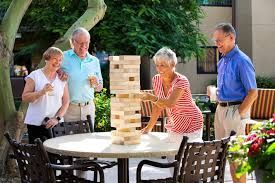


A group of elderly people are playing a game of jenga outside.
By Donna Nichols March 3, 2026
Spring has a way of softening the world. The air warms, the light lingers, and suddenly the small things — a bird call, a new bloom, a gentle breeze — feel like invitations to breathe a little deeper. For many seniors, especially those carrying grief, stress, or the weight of a long winter, March can feel like a quiet turning point. Here’s why spring so often brings emotional renewal, no matter your age. 1. Light Returns, and So Does Energy Longer days naturally lift mood. More sunlight helps regulate sleep, boosts energy, and gently nudges the body out of winter’s heaviness. Even a few minutes outside can shift the way the day feels. 2. Nature Models Healing Spring is a season of second chances. Trees bud again, flowers push through the soil, and the world rebuilds itself without rushing. For seniors navigating loss or change, this slow, steady renewal can feel reassuring — a reminder that healing isn’t linear, but it is possible. 3. Movement Feels More Natural Warmer weather encourages small steps: a walk to the mailbox, a few minutes on the porch, tending to a plant. These simple movements help ease stiffness, improve mood, and reconnect the body with the world around it. 4. Social Life Blossoms Too As the weather improves, people naturally come out of hibernation. Neighbors chat outside, community events pick up, and families gather more often. Even brief interactions can brighten a day and reduce feelings of isolation. 5. Spring Encourages Reflection — and Release There’s something about fresh air and open windows that invites a mental reset. Many seniors find themselves sorting through memories, letting go of what no longer serves them, and making space for what’s next. A Season That Meets You Where You Are Spring doesn’t demand big changes. It simply offers gentle reminders: you’re still growing, still healing, still here. Whether you’re grieving, rebuilding, or simply ready for a lighter season, March brings a quiet kind of hope — one that arrives softly and stays.
By Donna Nichols February 5, 2026
The body content of your post goes here. To edit this text, click on it and delete this default text and start typing your own or paste your own from a different source.
By Donna Nichols February 2, 2026
Small Habits That Make a Big Difference February brings a soft reminder to pause and check in with the most loyal companion we have — our heart. It beats for us without asking, carrying us through decades of joy, loss, laughter, and change. American Heart Month invites us to honor that steady work with simple habits that help us feel stronger, more energized, and more connected. The Power of Small Steps Heart health doesn’t require dramatic resolutions or strict routines. In fact, the most meaningful changes are often the smallest ones — the ones we can weave into our day without feeling overwhelmed. A ten‑minute walk after breakfast. Choosing water before coffee. Stretching your arms and shoulders while waiting for the kettle to boil. Turning on a favorite song and letting your body sway a little. These tiny choices add up. They support circulation, boost mood, and remind us that caring for ourselves is still possible at every age. Movement That Meets You Where You Are Not everyone can take long walks or join a fitness class — and that’s okay. Gentle movement counts. • Marching your feet while seated • Rolling your shoulders to release tension • Standing up and sitting down a few times to strengthen your legs • Reaching toward the ceiling to open your chest Every bit of movement helps the heart do its job with less strain. Food That Loves You Back Heart‑healthy eating doesn’t have to be complicated. Think in terms of adding rather than restricting. • Add a handful of berries to breakfast • Add a few colorful vegetables to lunch • Add a sprinkle of nuts or seeds for healthy fats • Add one extra glass of water during the day Small additions feel doable — and they nourish the body in ways you can feel. Connection Is Heart Medicine, Too Loneliness can weigh on the heart just as much as physical strain. February is a wonderful time to reach out. Call a friend you haven’t spoken to in a while. Share a memory with a grandchild. Join a community activity, even if just for an hour. Let someone know you’re thinking of them. Human connection is one of the most powerful heart‑protective habits we have. A Month to Celebrate Your Strength Your heart has carried you through so much — every milestone, every challenge, every moment of joy. This month is not about perfection. It’s about honoring your resilience and choosing one or two small habits that make you feel good. A healthier heart doesn’t happen overnight. It happens in the quiet, steady choices we make each day. And February is the perfect time to begin.